
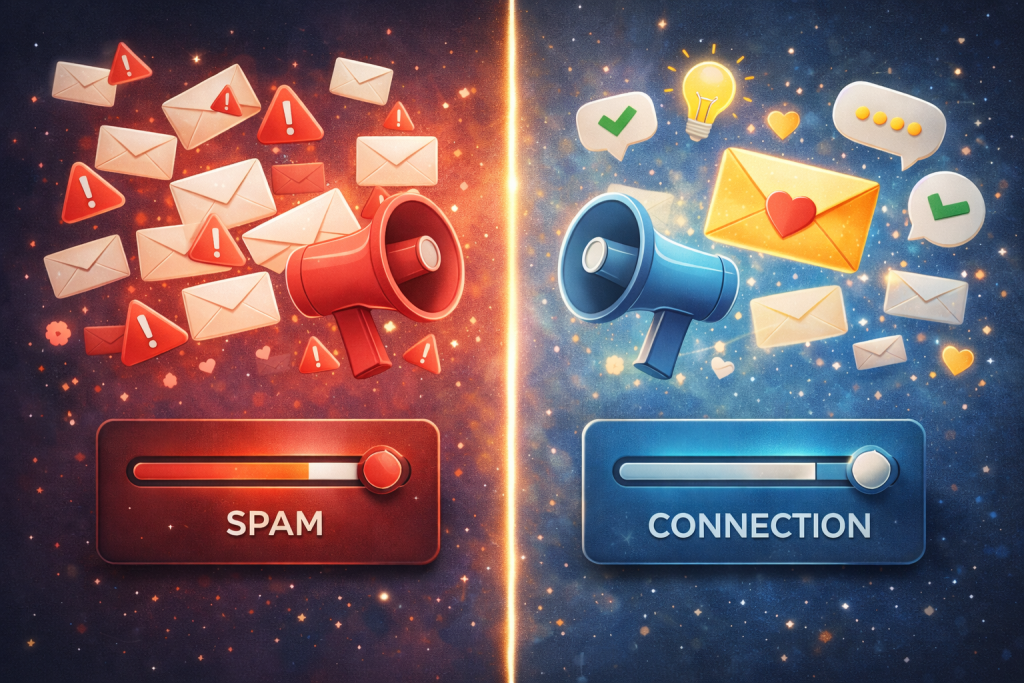
Email automation is a balance between consistency and consent. Between being present and being intrusive. Done well, it builds connection. Done badly, it becomes noise.
The problem isn’t automation itself. The problem is when automation forgets there’s a human on the other side of the screen. People don’t mind receiving emails. They mind receiving emails that feel irrelevant, rushed, or purely transactional. When every message feels like a sales push, trust erodes quickly.
Good email automation feels like a conversation that continues even when you’re not there. It’s timely, thoughtful and purposeful. It delivers value before it ever asks for anything. It reminds people why they chose to hear from you in the first place.
Spam happens when frequency replaces intention. When systems are set to send rather than to serve. When content is created to fill space instead of deepen relationships. That’s when open rates drop, unsubscribes rise, and your brand starts to feel distant instead of connected.
Connection happens when automation supports your voice rather than replaces it. When emails sound like you. When they acknowledge where someone is in their journey. When they inform, reassure, educate or guide instead of constantly selling.
Email is still one of the most powerful trust channels you have. It’s private. It’s direct. It’s permission-based. But that power comes with responsibility. Every automated message should earn its place in someone’s inbox.
The goal isn’t more emails.
It’s better emails.